Honourable Ladies and Gentlemen,
Commissioner for the Rights of the Child, Honourable Ms. Elena Pericleous,
Deputy Minister of Culture, Dr. Lina Kassianidou,
President of the Cyprus Association of Children’s and Young People’s Books, Ms. Christina Christodoulou,
dear educators, researchers and creators of children’s and young people’s books, ladies and gentlemen, It is with great pleasure that I have been invited to preface the work of the artist and illustrator Louiza Kaimaki, Cyprus’ candidate for the Hans Christian Andersen Awards 2026 in the category “Illustration”.
In this brief presentation I will attempt to mention some key aspects of her work, treating it not as a set of isolated, successful images, but as a coherent, multi-layered visual discourse. A discourse that creatively converses with the literature, pedagogical practice and cultural reflection of our time.
Louiza Kaimaki was born in 1976 in Nicosia. Her professional relationship with art began immediately after high school, with preparatory studies in drawing and visual arts in Cyprus, and continued in the United Kingdom, at Manchester Metropolitan University, where she graduated in 1999 with a BA (Hons) Illustration with Animation degree. This education shaped an iconographic identity that combines storytelling, communicative power and painterly sensitivity.
She has cited as important influences, which marked her childhood with their visual work and their artistic identity, creators such as Sofia Zarabouka and Vaso Psaraki. From Zarabouka she draws her sense of dreaminess and open imaginative field and draws inspiration especially from her works with egg tempera. On the other hand, Vaso Psaraki inspired her through her excellent work as an illustrator and writer, since she had met her at the beginning of her career in a workshop hosted by the CyBBY
Cyprus Board on Books for Young People (IBBY) , and from there she had the opportunity to collaborate with her and learn a lot. An important collaborator and help for her and her work is also her twin sister Eftychia Kaimaki, who is an interpreter, translator and tourist guide. Due to these roles she holds, Eftychia has an unlimited knowledge of our Cyprus, both for the history, the natural landscape, but also the traditional customs and traditions, from which the illustrator draws the information she needs to enrich her work.
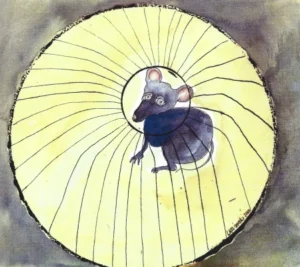 The first illustrated children’s book by Louiza Kaimaki, entitled “A Fairy Tale and a Song“, based on a text by Athos Hajimadtheos, was published by Kostas Epiphanios Publications in Nicosia in 2002. Since then, she has illustrated more than twenty books and has been honored with important awards, including the State Literature Awards of the Ministry of Education, Sports and Youth of Cyprus: in 2004 for the illustration of the book “A New Coat for Ben” (Rachel Davey & Toby Macklin) and in 2008 for the book “Real Little Tiger” (Kika Poulcheriou). Her international presence, with many participations in important events, such as the Biennale of Illustration in Belgrade and Bratislava, confirms the potential of her work beyond national borders. She collaborates with artists and writers from Cyprus and around the world, which is why the books she illustrates have been translated into various languages.
In the contemporary theory of children’s literature, illustration is no longer considered simply a complement to the written word. It is treated as an autonomous semiotic code, which co-shapes the meaning of the work. Kaimaki’s work fits perfectly into this perception: word and image coexist in creative tension, offering the reader not only a linear, but also a spatial reading experience. Kaimaki’s illustrations are characterized by a balance between the realistic and the imaginative. The spaces, landscapes and figures refer to recognizable experiences of everyday life, while at the same time leaving room for the development of the imagination of the child- reader.
Of particular importance is her choice of technique, which is characterized by the handmade quality of the image she creates. The conscious use of water-soluble materials, such as gouache and acrylic, which are combined in a way that highlights the transparency, color sensitivity and gestural quality of the image. This choice of technique is not neutral: it serves an illustration that remains “open”, not absolutely realistic, allowing the child’s imagination to fill in the gaps. The choice of empty white space on her pages works in a similar way. Through the combination of these two elements, the image does not function as a decorative complement to the text, but is transformed into an active co-configurer of meaning, involving the reader emotionally, perceptually and intellectually.
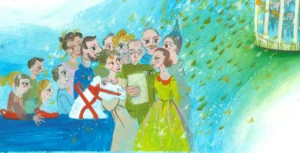 Studying her work, it is evident that Kaimaki is active in a wide range of thematic fields: from literature for young ages to historical books for children and teenagers. In the emblematic work A New Coat for Ben, which was awarded the State Illustration Award and was included in the IBBY Honour List 2006, the image balances between personal experience and collective memory, highlighting issues of care, time and emotional bond. The international recognition of this work demonstrates the importance of illustration as a carrier of universal values.
Her contribution to the field of historical illustration is also significant, and in particular in the series History of Cyprus (published by Phileleftheros). There, the image is called upon to handle traumatic and complex historical events for a young audience. Kaimaki chooses an approach that combines historical documentation and artistic freedom, with a strong sense of responsibility towards collective memory. She herself has emphasized that illustrating history is not simply an artistic challenge, but also a moral act.
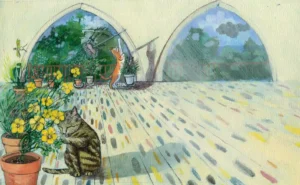 The way in which animals are depicted in her work deserves special mention. The animals in Kaimaki’s images do not simply function as narrative characters or symbolic substitutes for humans. On the contrary, they are rendered with what we could call empathetic realism. They maintain anatomical recognition and expressiveness, since they are presented as other “people”, without being trapped in photographic realism. Their gaze, posture and relationship with space allow the reader to project emotions and experiences, without the meaning being “closed” interpretively.
A typical example is the figure of the cat Jack in the Jack-the-Cat’s Adventures series, which we will explore further in the workshop that will follow in the second part of the conference. The Jack-the-Cat’s Adventures© series is the fruit of her bi-communal collaboration with the author Sezgi Yalin and has been awarded the Sir Stelios Bi- Communal Award (2017). Jack the cat, who is inspired by the author’s real cat, is not presented as an anthropomorphic cartoon, but as a figure-bridge between the human and non-human worlds. Through this “soft” realism, the illustration cultivates a relationship of identification, without negating the otherness of the animal. Through the depiction of movement, travel and exploration, with an emphasis on the diverse natural landscape and animals of Cyprus, values such as perseverance, self-awareness, risk-taking and the management of change are projected. These values are not projected didactically, but are organically integrated into the flow of the narrative and the image, which Kaimaki creates with mastery.
The illustration of the wild fauna of Cyprus does not function as a simple backdrop. The dense presence of plants, trees, animals and landscapes transforms the natural environment into a co-protagonist of the narrative. This also happens in Pupa, but it is particularly presented in the second book of the series, entitled Jack-the-Cat Goes Wild. We can suggest that the illustration introduces children to an early ecological awareness. Specifically, the depiction of Cypriot wildlife activates what ecocritical theory describes as environmental imagination. The reader is invited to perceive nature as an active subject and not as a passive background to human action. The connection of visual representation with real elements – such as the coexistence of images and information material – enhances the transition from imagination to knowledge.
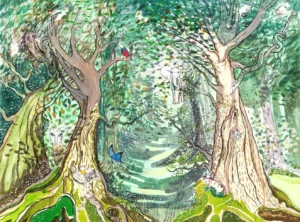 Nature in the author’s work is also portrayed as a space of abundance and relationship. Through rhythmic repetitions of natural patterns, plants, trees and the coexistence of species (e.g. animals and insects hidden within the natural landscape), but also through the use of different perspectives, the image cultivates, without didacticism, a kind of “ecology of care”, which is directly linked to values such as respect, empathy and sustainability, which of course come to be reinforced through the equally important linguistic narratives.
Of course, in the award-winning Jack-the-Cat’s Adventures© series, both the story and the illustration acquire additional cultural weight. These books propose an alternative narrative for Cyprus: a unified geography without borders, where nature, animals and travel function as symbols of coexistence and bearers of common values. Here, the image is not only addressed to the child, but also to the adult reader, activating memories, desires and cultural expectations.
In summary, the work of Louiza Kaimaki confirms that illustration is a form of discourse with aesthetic, pedagogical and social significance. A discourse that is not limited to telling stories, but essentially contributes to shaping ways of reading, relating to nature and understanding the world. From this point of view, her work is also connected to contemporary theoretical approaches, such as ecocriticism and the study of cultural memory in children’s literature. The image is not simply a carrier of information, but a means of shaping attitudes and values in young readers.
From a pedagogical perspective, Kaimaki’s illustration functions as a multimodal learning tool. She supports visual literacy, critical thinking, and emotional intelligence, offering multiple points of access to meaning for students from diverse cultural and linguistic backgrounds. In educational settings, her illustrations are utilized as a starting point for narrative extensions, creative writing, visual expression and interdisciplinary approaches that connect literature with science, geography, and environmental science. As works of art, Louiza Kaimaki’s complex, visually rich images remind us as readers and viewers of the importance of slowing down, in-depth observation, and activating memory, skills that invite the reader to active interpretation.
Finally, the international recognition of her work – through awards, translations, participation in Biennales and her recent nomination for the Hans Christian Andersen Award 2026 – is not just a personal distinction. It highlights the potential of Cypriot illustration and its potential to contribute substantially to the global dialogue around children’s and young adult books.
Thank you very much, and on behalf of Louiza, I would like to express my warm thanks to the Association for the honour given to her, as well as to all the contributors who organized today’s conference.
Αξιότιμες και αξιότιμοι,
Επίτροπε των Δικαιωμάτων του Παιδιού, αξιότιμη κα. Έλενα Περικλέους,
Υφυπουργέ Πολιτισμού, Δρα Λίνα Κασσιανίδου,
Πρόεδρε του Κυπριακού Συνδέσμου Παιδικού και Νεανικού Βιβλίου, κα.Χριστίνα Χριστοδούλου
αγαπητοί εκπαιδευτικοί, ερευνητές και δημιουργοί του παιδικού και νεανικού βιβλίου,
κυρίες και κύριοι,
Είναι με μεγάλη χαρά που κλήθηκα να προλογίσω το έργο της εικαστικού και εικονογράφου Λουϊζας Καϊμάκη, υποψήφιας της Κύπρου για τα Βραβεία Hans Christian Andersen 2026 στην κατηγορία «Εικονογράφηση». Στη σύντομη αυτή εισήγηση θα επιχειρήσω να αναφέρω ορισμένες βασικές πτυχές του έργου της, αντιμετωπίζοντάς το όχι ως ένα σύνολο μεμονωμένων, επιτυχημένων εικόνων, αλλά ως έναν συνεκτικό, πολυεπίπεδο εικαστικό λόγο. Έναν λόγο που συνομιλεί δημιουργικά με τη λογοτεχνία, την παιδαγωγική πράξη και τον πολιτισμικό στοχασμό της εποχής μας.
Η Λουΐζα Καϊμάκη γεννήθηκε το 1976 στη Λευκωσία. H επαγγελματική της σχέση με την τέχνη ξεκίνησε αμέσως μετά το λύκειο, με προπαρασκευαστικές σπουδές στο σχέδιο και τις εικαστικές τέχνες στην Κύπρο, και συνεχίστηκε στο Ηνωμένο Βασίλειο, στο Manchester Metropolitan University, όπου αποφοίτησε το 1999 με πτυχίο BA (Hons) Illustration with Animation. Η εκπαίδευση αυτή διαμόρφωσε μια εικονογραφική ταυτότητα που συνδυάζει αφήγηση, επικοινωνιακή δύναμη και ζωγραφική ευαισθησία.
Η ίδια έχει αναφέρει ως σημαντικές επιρροές, οι οποίες σημάδεψαν την παιδική της ηλικία με το εικαστικό τους έργο και την καλλιτεχνική τους ταυτότητα, δημιουργούς όπως η Σοφία Ζαραμπούκα και η Βάσω Ψαράκη. Από τη Ζαραμπούκα αντλεί την αίσθηση του ονειρικού και του ανοιχτού φαντασιακού πεδίου και αντλεί έμπνευση ιδίως από τα έργα της με αυγοτέμπερα. Από την άλλη, η Βάσω Ψαράκη την ενέπνευσε μέσω της εξαιρετικής της δουλειάς ως εικονογράφος και συγγραφέας, αφού την είχε γνωρίσει στην αρχή της καριέρας της σε ένα εργαστήριο του Συνδέσμου
Κυπριακός Σύνδεσμος Παιδικού και Νεανικού Βιβλίου, και από εκεί είχε την ευκαιρία να συνεργαστεί μαζί της και να μάθει πολλά. Σημαντική συνεργάτης και βοήθεια για την ίδια και το έργο της, αποτελεί και η δίδυμη αδελφή της Ευτυχία Καϊμάκη, η οποία είναι διερμηνέας, μεταφράστρια και τουριστική ξεναγός. Λόγω αυτών των ρόλων που κατέχει, η Ευτυχία έχει μια απεριόριστη γνώση για την Κύπρο μας, τόσο για την ιστορία, το φυσικό τοπίο, αλλά και τα παραδοσιακά ήθη και έθιμα, από την οποία η εικονογράφος αντλεί τις πληροφορίες που χρειάζεται για να εμπλουτίσει το έργο της.
Το πρώτο εικονογραφημένο παιδικό βιβλίο της Λουϊζας Καϊμάκη, με τίτλο «Ένα παραμύθι και ένα τραγούδι», σε κείμενο του Άθου Χατζηματθαίου εκδόθηκε από τις Εκδόσεις Κώστα Επιφανίου στη Λευκωσία το 2002. Έκτοτε, έχει εικονογραφήσει περισσότερα από είκοσι βιβλία και έχει τιμηθεί με σημαντικά βραβεία, μεταξύ των οποίων είναι και τα Κρατικά Βραβεία Λογοτεχνίας του Υπουργείου Παιδείας, Αθλητισμού και Νεολαίας Κύπρου: το 2004 για την εικονογράφηση του βιβλίου «Ένα καινούργιο παλτό για τον Μπεν» (Rachel Davey & Toby Macklin) και το 2008 για το βιβλίο «To αληθινο τιγράκι» (Κίκα Πουλχερίου). Η διεθνής της παρουσία, με πολλές συμμετοχές σε σημαντικές διοργανώσεις, όπως η Μπιενάλε Εικονογράφησης στο Βελιγράδι και την Μπρατισλάβα, επιβεβαιώνει τη δυναμική του έργου της πέρα από τα εθνικά όρια. Η ίδια συνεργάζεται με καλλιτέχνες και συγγραφείς από την Κύπρο και όλο τον κόσμο, για αυτό το λόγο και τα βιβλία τα οποία εικονογραφεί είναι μεταφρασμένα σε διάφορες γλώσσες.
Στη σύγχρονη θεωρία της παιδικής λογοτεχνίας, η εικονογράφηση δεν θεωρείται πλέον απλώς συμπληρωματική του γραπτού λόγου. Αντιμετωπίζεται ως αυτόνομος σημειωτικός κώδικας, ο οποίος συνδιαμορφώνει το νόημα του έργου. Το έργο της Καϊμάκη εντάσσεται απόλυτα σε αυτή την αντίληψη: λόγος και εικόνα συνυπάρχουν σε δημιουργική ένταση, προσφέροντας στον αναγνώστη όχι μόνο μια γραμμική, αλλά και μια χωρική εμπειρία ανάγνωσης.
Η εικονογράφηση της Καϊμάκη χαρακτηρίζεται από μια ισορροπία ανάμεσα στο ρεαλιστικό και το φαντασιακό. Οι χώροι, τα τοπία και οι μορφές παραπέμπουν σε αναγνωρίσιμα βιώματα της καθημερινότητας, ενώ ταυτόχρονα αφήνουν χώρο για την ανάπτυξη της φαντασίας του παιδιού-αναγνώστη.
Ιδιαίτερη σημασία έχει και η τεχνική της επιλογή, η οποία χαρακτηρίζεται από τη χειροποίητη ποιότητα της εικόνας που δημιουργεί. Η συνειδητή χρήση υδατοδιαλυτών υλικών, όπως το γκουάς και το ακρυλικό, τα οποία συνδυάζονται με τρόπο που αναδεικνύει τη διαφάνεια, τη χρωματική ευαισθησία και τη χειρονομιακή ποιότητα της εικόνας. Η τεχνική αυτή επιλογή δεν είναι ουδέτερη: υπηρετεί μια εικονογράφηση που παραμένει «ανοιχτή», μη απολύτως ρεαλιστική, επιτρέποντας στη φαντασία του παιδιού να συμπληρώσει τα κενά. Με παρόμοιο τρόπο λειτουργεί και η επιλογή του άδειου λευκού χώρου στις σελίδες της. Μέσα από το συνδυασμό αυτών των δύο στοιχείων, η εικόνα δεν λειτουργεί ως διακοσμητικό συμπλήρωμα του κειμένου, αλλά μετατρέπεται σε ενεργό συνδιαμορφωτή του νοήματος, εμπλέκοντας τον αναγνώστη συναισθηματικά, αισθητηριακά και νοητικά.
Μελετώντας το έργο της, είναι εμφανές ότι η Καϊμάκη δραστηριοποιείται σε ένα ευρύ φάσμα θεματικών πεδίων: από τη λογοτεχνία για μικρές ηλικίες έως το ιστορικό βιβλίο για παιδιά και εφήβους. Στο εμβληματικό έργο A New Coat for Ben, που τιμήθηκε με Κρατικό Βραβείο Εικονογράφησης και εντάχθηκε στον IBBY Honour List 2006, η εικόνα ισορροπεί ανάμεσα στο προσωπικό βίωμα και τη συλλογική μνήμη, αναδεικνύοντας ζητήματα φροντίδας, χρόνου και συναισθηματικού δεσμού. Η διεθνής αναγνώριση του έργου αυτού καταδεικνύει τη σημασία της εικονογράφησης ως φορέα πανανθρώπινων αξιών.
Σημαντική είναι και η συμβολή της στον χώρο της ιστορικής εικονογράφησης, και ειδικότερα στη σειρά Ιστορία της Κύπρου (εκδ. Φιλελεύθερος). Εκεί, η εικόνα καλείται να διαχειριστεί τραυματικά και σύνθετα ιστορικά γεγονότα για ένα νεανικό κοινό. Η Καϊμάκη επιλέγει μια προσέγγιση που συνδυάζει ιστορική τεκμηρίωση και καλλιτεχνική ελευθερία, με έντονο αίσθημα ευθύνης απέναντι στη συλλογική μνήμη. Η ίδια έχει τονίσει ότι η εικονογράφηση της ιστορίας δεν είναι απλώς καλλιτεχνική πρόκληση, αλλά και ηθική πράξη.
Ιδιαίτερη μνεία αξίζει ο τρόπος με τον οποίο απεικονίζονται τα ζώα στο έργο της. Τα ζώα στις εικόνες της Καϊμάκη δεν λειτουργούν απλώς ως αφηγηματικοί χαρακτήρες ή συμβολικά υποκατάστατα του ανθρώπου. Αντιθέτως, αποδίδονται με αυτό που θα μπορούσαμε να ονομάσουμε ενσυναισθητική ρεαλιστικότητα. Διατηρούν ανατομική αναγνωρισιμότητα και εκφραστικότητα, αφού παρουσιάζονται σαν άλλοι «άνθρωποι», χωρίς να εγκλωβίζονται σε φωτογραφικό ρεαλισμό. Το βλέμμα, η στάση του σώματος και η σχέση τους με τον χώρο επιτρέπουν στον αναγνώστη να προβάλλει συναισθήματα και εμπειρίες, χωρίς το νόημα να «κλείνει» ερμηνευτικά.
Χαρακτηριστικό παράδειγμα αποτελεί η μορφή του γάτου Jack στη σειρά Jack-the-Cat’s Adventures, την οποία θα διερευνήσουμε περαιτέρω και στο εργαστήρι που θα ακολουθήσει στο δεύτερο μέρος της ημερίδας. Η σειρά Jack-the-Cat’s Adventures© αποτελεί τον καρπό της δικοινοτικής συνεργασίας της με τη συγγραφέα Sezgi Yalin και έχει βραβευτεί με το Sir Stelios Bi-Communal Award (2017). Ο γάτος Jack, ο οποίος είναι εμπνευσμένος από τον πραγματικό γάτο της συγγραφέως, δεν παρουσιάζεται ως ανθρωπομορφικό καρτούν, αλλά ως μία φιγούρα-γέφυρα μεταξύ ανθρώπινου και μη ανθρώπινου κόσμου. Μέσα από αυτή τη «απαλή» ρεαλιστικότητα, η εικονογράφηση καλλιεργεί σχέση ταύτισης, χωρίς να αναιρεί την ετερότητα του ζώου. Μέσα από την απεικόνιση της κίνησης, του ταξιδιού και της εξερεύνησης, με έμφαση στη ποικιλόμορφο φυσικό τοπίο και τα ζώα της Κύπρου, προβάλλονται αξίες όπως η επιμονή, η αυτογνωσία, η ανάληψη ρίσκου και η διαχείριση της αλλαγής. Οι αξίες αυτές δεν προβάλλονται διδακτικά, αλλά ενσωματώνονται οργανικά στη ροή της αφήγησης και της εικόνας, την οποία η Καϊμάκη δημιουργεί με μαεστρία.
Η εικονογράφηση της άγριας πανίδας της Κύπρου δεν λειτουργεί ως απλό σκηνικό. Η πυκνή παρουσία φυτών, δέντρων, ζώων και τοπίων μετατρέπει το φυσικό περιβάλλον σε συν-πρωταγωνιστή της αφήγησης. Αυτό συμβαίνει και στην Pupa, αλλά παρουσιάζεται ιδιαίτερα στο δεύτερο βιβλίο της σειράς, με τίτλο Jack-the-Cat Goes Wild. Μπορούμε να εισηγηθούμε ότι η εικονογράφηση εισάγει τα παιδιά σε μια πρώιμη οικολογική συνείδηση. Συγκεκριμένα, η απεικόνιση της κυπριακής άγριας πανίδας ενεργοποιεί αυτό που η οικοκριτική θεωρία περιγράφει ως environmental imagination — περιβαλλοντική φαντασία. Ο αναγνώστης καλείται να αντιληφθεί τη φύση ως ενεργό υποκείμενο και όχι ως παθητικό φόντο της ανθρώπινης δράσης. Η σύνδεση της εικαστικής αναπαράστασης με πραγματικά στοιχεία – όπως η συνύπαρξη εικόνων και πληροφοριακού υλικού – ενισχύει τη μετάβαση από τη φαντασία στη γνώση.
H φύση στο έργο της δημιουργού αποδίδεται επίσης ως χώρος αφθονίας και σχέσης. Μέσα από ρυθμικές επαναλήψεις φυσικών μοτίβων, φυτών, δέντρων και τη συνύπαρξη ειδών (π.χ. ζώα και έντομα κρυμμένα μέσα στο φυσικό τοπίο), αλλά και μέσα από τη χρήση διαφορετικών προοπτικών, η εικόνα καλλιεργεί, χωρίς διδακτισμό ένα είδος «οικολογίας φροντίδας», η οποία συνδέεται άμεσα με αξίες όπως ο σεβασμός, η ενσυναίσθηση και η βιωσιμότητα, που φυσικά έρχονται να ενισχυθούν μέσα από τις εξίσου σημαντικές γλωσσικές αφηγήσεις.
Φυσικά, στη βραβευμένη σειρά Jack-the-Cat’s Adventures©, τόσο η ιστορία όσο και η εικονογράφηση αποκτά επιπλέον πολιτισμικό βάρος. Τα βιβλία αυτά προτείνουν ένα εναλλακτικό αφήγημα για την Κύπρο: μια ενιαία γεωγραφία χωρίς σύνορα, όπου η φύση, τα ζώα και το ταξίδι λειτουργούν ως σύμβολα συνύπαρξης και φορείς κοινών αξιών. Εδώ, η εικόνα δεν απευθύνεται μόνο στο παιδί, αλλά και στον ενήλικο αναγνώστη, ενεργοποιώντας μνήμες, επιθυμίες και πολιτισμικές προσδοκίες.
Συνοψίζοντας, το έργο της Λουΐζας Καϊμάκη επιβεβαιώνει ότι η εικονογράφηση αποτελεί μορφή λόγου με αισθητική, παιδαγωγική και κοινωνική βαρύτητα. Έναν λόγο που δεν εξαντλείται στην αφήγηση ιστοριών, αλλά συμβάλλει ουσιαστικά στη διαμόρφωση τρόπων ανάγνωσης, σχέσης με τη φύση και κατανόησης του κόσμου. Από αυτή την άποψη, το έργο της συνδέεται και με σύγχρονες θεωρητικές προσεγγίσεις, όπως η οικοκριτική και η μελέτη της πολιτισμικής μνήμης στην παιδική λογοτεχνία. Η εικόνα δεν είναι απλώς φορέας πληροφορίας, αλλά μέσο διαμόρφωσης στάσεων και αξιών στους νεαρούς αναγνώστες.
Από παιδαγωγική σκοπιά, η εικονογράφηση της Καϊμάκη λειτουργεί ως πολυτροπικό εργαλείο μάθησης. Υποστηρίζει την οπτική παιδεία, την κριτική σκέψη και τη συναισθηματική νοημοσύνη, προσφέροντας πολλαπλά σημεία πρόσβασης στο νόημα για μαθητές/τριες με διαφορετικά πολιτισμικά και γλωσσικά υπόβαθρα. Σε εκπαιδευτικά περιβάλλοντα, οι εικονογραφήσεις της αξιοποιούνται ως αφετηρία για αφηγηματικές επεκτάσεις, δημιουργική γραφή, εικαστική έκφραση και διαθεματικές προσεγγίσεις που συνδέουν τη λογοτεχνία με τις φυσικές επιστήμες, τη γεωγραφία και την περιβαλλοντική επιστήμη. Ως έργα τέχνης, οι πολυσύνθεστες, εικαστικά άρτιες εικόνες της Λουϊζας Καϊμάκη μας υπενθυμίζουν ως αναγνώστες αλλά και ως θεατές τη σημασία της επιβράδυνσης, της εις-βάθους παρατήρησης, και της ενεργοποίησης της μνήμης, δεξιότητες που προσκαλούν τον αναγνώστη σε ενεργή ερμηνεία.
Τέλος, η διεθνής αναγνώριση του έργου της – μέσα από βραβεία, μεταφράσεις, συμμετοχές σε Μπιενάλε και την πρόσφατη υποψηφιότητά της για το Hans Christian Andersen Award 2026– δεν αποτελεί απλώς προσωπική διάκριση. Αναδεικνύει τη δυναμική της κυπριακής εικονογράφησης και τη δυνατότητά της να συμβάλει ουσιαστικά στον παγκόσμιο διάλογο γύρω από το παιδικό και νεανικό βιβλίο.
Σας ευχαριστώ θερμά, και εκ μέρους της Λουΐζας να εκφράσω θερμές ευχαριστίες προς τον Σύνδεσμο για την τιμή που της δίνεται, καθώς και προς όλους τους συντελεστές, οι οποίοι διοργάνωσαν τη σημερινή ημερίδα.